How use and maintain your AEG cooktop with integrated extractor hob - Video
Issue
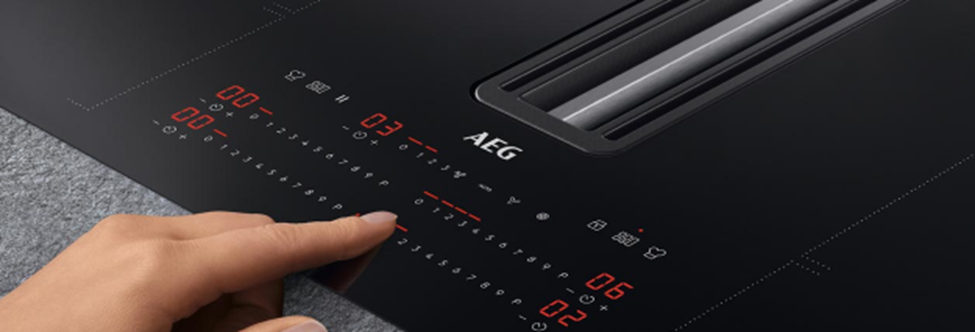
Applies to
- Extractor Hob
Solution
Cleaning the glass surface of the hob
Clean the hob after each use.
Always use cookware with a clean base.
Remove immediately
Melted plastic, plastic foil, salt, sugar, and food with sugar, otherwise, the dirt can cause damage to the hob. Take care to avoid burns. Use a special hob scraper on the glass surface at an acute angle and move the blade on the surface.
Remove when the hob is sufficiently cool
limescale rings, water rings, fat stains, shiny metallic discoloration. Clean the hob with a mildly abrasive cleaning milk and an anti-scratch, delicate sponge. After cleaning, wipe the hob dry with a microfibre cloth.
Persistent marks and stains
apply moderate pressure and scrub the surface with an anti-scratch, delicate sponge and a mildly abrasive cleaning milk until the stains are no longer visible.
Cleaning the hood
Grid
The grid guides the air into the hood. Additionally, it protects the hood system and prevents foreign objects from falling inside by accident. The grid is made of aluminium. You can wash the grid manually or in a dishwasher. Wipe the grid with a soft cloth.
Drip tray
There is a drip tray located under the hood. It collects the condensation created during each cooking process. At any time, water might be dripping from the hood system into the drip tray. Remember to empty the tray regularly. The drip tray is visible from above once you remove the grid and the filter housing along with the filters. Before you access the drip tray, make sure to protect the contents of the drawer or cabinet under the hob from accidental spillage.
1. To access the drip tray, first unlock the centre latch located at the back. Slide the latch in the opposite direction. Take hold of the drip tray with both hands and slide it carefully to the right.
2. Move the drip tray vertically downwards. Be careful not to spill the water.
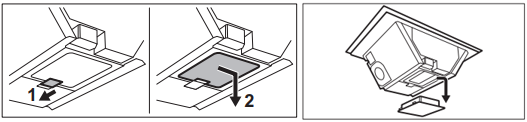
3. Dispose of the water and rinse the drip tray out. You can wash the tray manually (using warm water, soap, and a soft cloth / sponge) or in a dishwasher (standard cycle).
Warning: Make sure no liquid gets inside the hood
If water or other liquids spill inside the hood system
1. Switch off the hood.
2. Lift the grid and clean the hood area carefully with warm water, a moist cloth or sponge and a mild cleaning agent.
3. Wipe away the excess liquid gathered on the bottom of the hood cavity using a sponge or a dry cloth.
4. Clean the filter, if needed (refer to "Cleaning the hood filter").
5. Empty the drip tray, if needed.
6. Switch on the hood, set the fan speed level to 2 or higher and let it run for some time to get rid of the remaining moisture.
Cleaning and regenerating the hood filters
The filtering unit consists of the following elements: grease filters combined with the grease filter housing A and the removable long life carbon filters B.
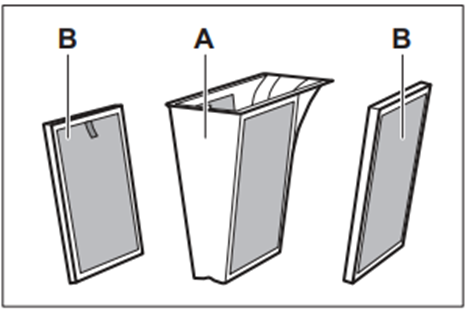
The grease filters A collect grease, oil, and food remains and prevent them from getting into the hood system. The long-life carbon filters B, containing active carbon foam, neutralise smoke and cooking smells. Clean the filters regularly and regenerate them periodically:
• Clean the grease filters A as soon as the built-up grease is visible. The cleaning frequency depends on the amount of fat and oil used in cooking. It is recommended to clean the filters once a month, or more frequently, if needed.
• Clean the long-life carbon filters B only when the built-up grease is visible.
• Regenerate the long-life carbon filters B only when the notification is on, that it is time to clean the grease filters A and regenerate the long-life carbon filters

The maximum number of regeneration cycles is 8 (approximately 3 years). After that time, the filters need to be replaced with new ones.
• Additionally, the hob has a built-in counter with a notification that reminds you about cleaning the grease filters and regenerating the long-life carbon filters. The counter for the notification starts automatically when you turn on the hood for the first time. After 140 hours of use, the indicator starts blinking to signal.
The notification stays on for 30 seconds after you deactivate the hood and the hob. The notification does not block the use of the hob.
Warning: Oversaturated filters can pose a risk of fire.
Disassembling / reassembling the filters
The filters and the grease filter housing are located right under the grid in the centre of the hob. Remove them carefully as they might be slippery due to accumulated grease.
1. Remove the Grid
2. Take out the grease filer housing grabbing the protruding handle
3. Take out the long-life carbon filters by grabbing the handle.
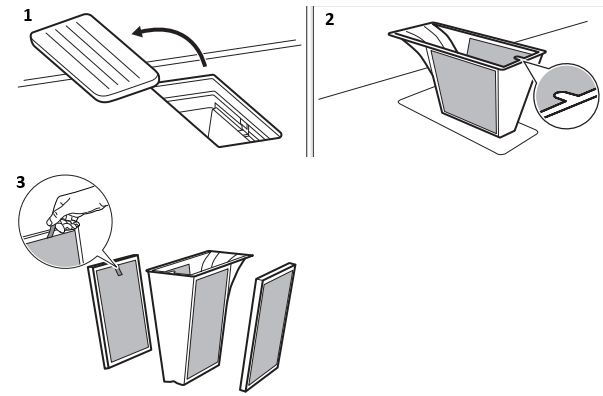
4. Reassemble the filtering unit after cleaning:
a. Slide the long-life carbon filters into the hood system along the built-in runners.
b. Place the grease filter housing back inside.
c. Place the grid back on.
Cleaning the grease filters and the grease filter housing
1. Wash the grease filter housing with the grease filters carefully in warm water using a mild cleaning agent, then rinse it with warm water. You can use a soft sponge, a soft cloth, or a non-abrasive cleaning brush to remove food remains, if necessary.
You can wash the grease filters and the grease filter housing in the dishwasher on a standard cycle with other dishes in the same load.
Note: Depending on the detergent type and the number of dishwasher cycles, some mild discoloration on the mesh may naturally occur. This does not affect the performance of the grease filter.
It is not recommended to use paper towels while cleaning / drying the filtering components.
2. Leave it for some time to dry at room temperature.
3. Put the grease filter housing with the grease filters back inside.
4. If the ‘regeneration symbol is on’ press the ‘fan speed symbol briefly’ to reset the counter. The counter restarts.
Cleaning the long-life carbon filters
1. Wash the filters carefully in warm water without any cleaning agents. Detergents can damage carbon filtration. You can use a soft sponge, a soft cloth, or a nonabrasive cleaning brush to remove food remains, if necessary. Alternatively, after removing heavier dirt from the filters, you can also wash the filters in a dishwasher at 65-70 °C (using a program longer than 90 min), without detergents and without dishes in the same load.
2. Leave the filters to dry for at least 24h at room temperature. The filters need to be fully dried before reassembly.
3. Reassemble the filtering unit and put it back inside.
Regenerating the long-life carbon filters
1. Clean the filters first, as described above.
2. Put the filters in the oven set to 100 °C for 120 min. Place the filters on the middle wire shelf. Use a non-fan oven function.
3. Reassemble the filtering unit and put it back inside.
4. Press the ‘fan speed symbol’ briefly to reset the counter. The counter restarts
Was this article helpful?
Related Articles
- Cleaning Oven Door - Video
- Oven light does not work
- Oven displays error F908, F113
- Discoloured marks or bubbles ceramic glass cleaning tips
- Carbon Filters How often should you replace them
- Condensation on Rangehood surfaces
- Rangehood noise - Troubleshooting
- How to use the pizza function on your oven
- The ignition on my gas hob keeps sparking
- Hob displays error message E9
Related Articles
- Cleaning Oven Door - Video
- Oven light does not work
- Oven displays error F908, F113
- Discoloured marks or bubbles ceramic glass cleaning tips
- Carbon Filters How often should you replace them
- Condensation on Rangehood surfaces
- Rangehood noise - Troubleshooting
- How to use the pizza function on your oven
- The ignition on my gas hob keeps sparking
- Hob displays error message E9